

 Image 1 of 1
Compound Class: Research Peptide
Purity Grade: ≥99% (HPLC Verified)
Appearance: Lyophilized white powder
Formulation: Research-grade lyophilized preparation
Storage Conditions: Store at -20°C, desiccated, protected from light
Solubility: Soluble in bacteriostatic water
Stability: Maintained under recommended storage conditions
Research Use: Intended strictly for laboratory and analytical research purposes
Handling Precautions: Research use only — Not for human consumption
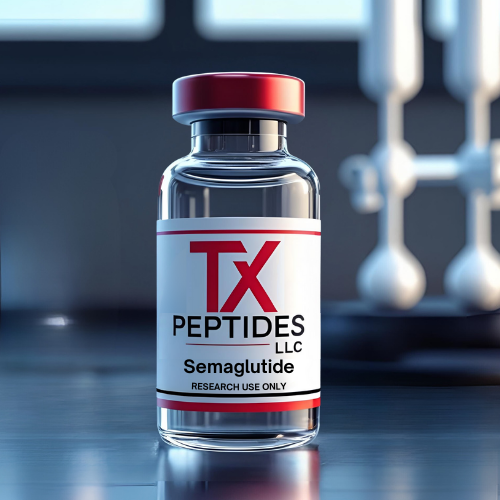
Semaglutide is a long-acting synthetic analog of glucagon-like peptide-1 (GLP-1), a naturally occurring incretin hormone. It demonstrates high affinity for GLP-1 receptors and is being investigated in laboratory studies for its ability to modulate glucose-dependent insulin secretion, suppress glucagon release, and influence satiety signals. Research applications include studies of metabolic regulation, pancreatic beta-cell activity, gastrointestinal motility, and energy balance in both in-vitro and in-vivo models. Because of its extended half-life, semaglutide is of particular interest in research focused on sustained incretin signaling and pharmacokinetics.
Helps regulate blood sugar levels
Increases insulin release when needed
Reduces appetite and slows digestion
Compound Class: Research Peptide
Purity Grade: ≥99% (HPLC Verified)
Appearance: Lyophilized white powder
Formulation: Research-grade lyophilized preparation
Storage Conditions: Store at -20°C, desiccated, protected from light
Solubility: Soluble in bacteriostatic water
Stability: Maintained under recommended storage conditions
Research Use: Intended strictly for laboratory and analytical research purposes
Handling Precautions: Research use only — Not for human consumption
Semaglutide is a long-acting synthetic analog of glucagon-like peptide-1 (GLP-1), a naturally occurring incretin hormone. It demonstrates high affinity for GLP-1 receptors and is being investigated in laboratory studies for its ability to modulate glucose-dependent insulin secretion, suppress glucagon release, and influence satiety signals. Research applications include studies of metabolic regulation, pancreatic beta-cell activity, gastrointestinal motility, and energy balance in both in-vitro and in-vivo models. Because of its extended half-life, semaglutide is of particular interest in research focused on sustained incretin signaling and pharmacokinetics.
Helps regulate blood sugar levels
Increases insulin release when needed
Reduces appetite and slows digestion