

 Image 1 of 1
Compound Class: Research Peptide
Purity Grade: ≥99% (HPLC Verified)
Appearance: Lyophilized white powder
Formulation: Research-grade lyophilized preparation
Storage Conditions: Store at -20°C, desiccated, protected from light
Solubility: Soluble in bacteriostatic water
Stability: Maintained under recommended storage conditions
Research Use: Intended strictly for laboratory and analytical research purposes
Handling Precautions: Research use only — Not for human consumption
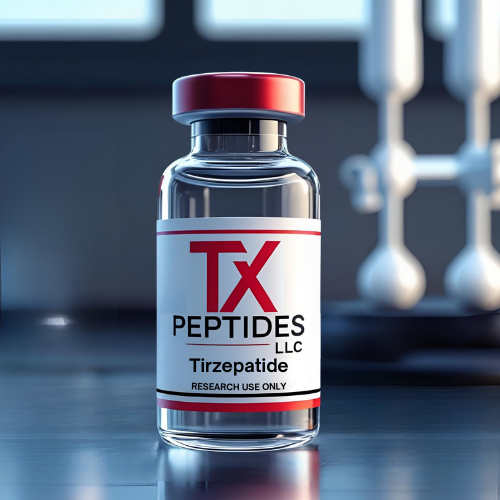
Tirzepatide is a synthetic peptide analog that functions as a dual glucose-dependent insulinotropic polypeptide (GIP) and glucagon-like peptide-1 (GLP-1) receptor agonist. This unique dual agonism makes tirzepatide an important compound of interest for laboratory research focused on metabolic pathways, energy balance, and peptide-based therapeutics.
Researchers have studied tirzepatide in relation to glucose regulation, appetite signaling, and weight management mechanisms in preclinical and clinical environments. Its distinct mechanism of action, compared to traditional GLP-1 receptor agonists, provides valuable opportunities for advancing the understanding of incretin biology.
Compound Class: Research Peptide
Purity Grade: ≥99% (HPLC Verified)
Appearance: Lyophilized white powder
Formulation: Research-grade lyophilized preparation
Storage Conditions: Store at -20°C, desiccated, protected from light
Solubility: Soluble in bacteriostatic water
Stability: Maintained under recommended storage conditions
Research Use: Intended strictly for laboratory and analytical research purposes
Handling Precautions: Research use only — Not for human consumption
Tirzepatide is a synthetic peptide analog that functions as a dual glucose-dependent insulinotropic polypeptide (GIP) and glucagon-like peptide-1 (GLP-1) receptor agonist. This unique dual agonism makes tirzepatide an important compound of interest for laboratory research focused on metabolic pathways, energy balance, and peptide-based therapeutics.
Researchers have studied tirzepatide in relation to glucose regulation, appetite signaling, and weight management mechanisms in preclinical and clinical environments. Its distinct mechanism of action, compared to traditional GLP-1 receptor agonists, provides valuable opportunities for advancing the understanding of incretin biology.