

 Image 1 of 1
Compound Class: Research Peptide
Purity Grade: ≥99% (HPLC Verified)
Appearance: Lyophilized white powder
Formulation: Research-grade lyophilized preparation
Storage Conditions: Store at -20°C, desiccated, protected from light
Solubility: Soluble in bacteriostatic water
Stability: Maintained under recommended storage conditions
Research Use: Intended strictly for laboratory and analytical research purposes
Handling Precautions: Research use only — Not for human consumption
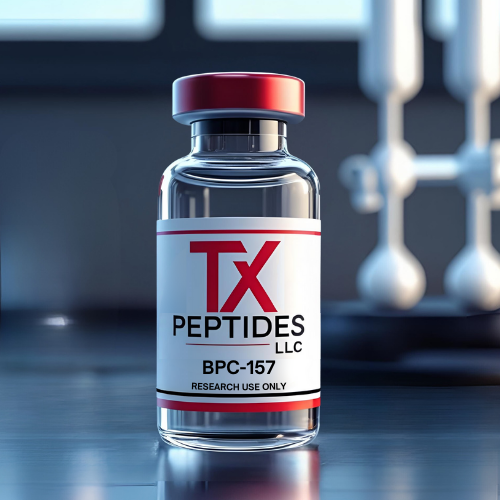
BPC-157 is a synthetic research peptide derived from a protective protein sequence originally identified in gastric compounds. In laboratory settings, BPC-157 has been studied for its potential role in tissue-response signaling, cellular regeneration pathways, angiogenesis-related activity, and peptide-mediated recovery mechanisms.
Research involving BPC-157 has explored its interactions with tendon, ligament, muscle, and gastrointestinal tissue models, making it a compound of interest in regenerative and biochemical research environments. Additional studies have investigated its stability, signaling activity, and influence on cellular migration and vascular response pathways under controlled experimental conditions.
Compound Class: Research Peptide
Purity Grade: ≥99% (HPLC Verified)
Appearance: Lyophilized white powder
Formulation: Research-grade lyophilized preparation
Storage Conditions: Store at -20°C, desiccated, protected from light
Solubility: Soluble in bacteriostatic water
Stability: Maintained under recommended storage conditions
Research Use: Intended strictly for laboratory and analytical research purposes
Handling Precautions: Research use only — Not for human consumption
BPC-157 is a synthetic research peptide derived from a protective protein sequence originally identified in gastric compounds. In laboratory settings, BPC-157 has been studied for its potential role in tissue-response signaling, cellular regeneration pathways, angiogenesis-related activity, and peptide-mediated recovery mechanisms.
Research involving BPC-157 has explored its interactions with tendon, ligament, muscle, and gastrointestinal tissue models, making it a compound of interest in regenerative and biochemical research environments. Additional studies have investigated its stability, signaling activity, and influence on cellular migration and vascular response pathways under controlled experimental conditions.