

 Image 1 of 1
Compound Class: Research Peptide
Purity Grade: ≥99% (HPLC Verified)
Appearance: Lyophilized white powder
Formulation: Research-grade lyophilized preparation
Storage Conditions: Store at -20°C, desiccated, protected from light
Solubility: Soluble in bacteriostatic water
Stability: Maintained under recommended storage conditions
Research Use: Intended strictly for laboratory and analytical research purposes
Handling Precautions: Research use only — Not for human consumption
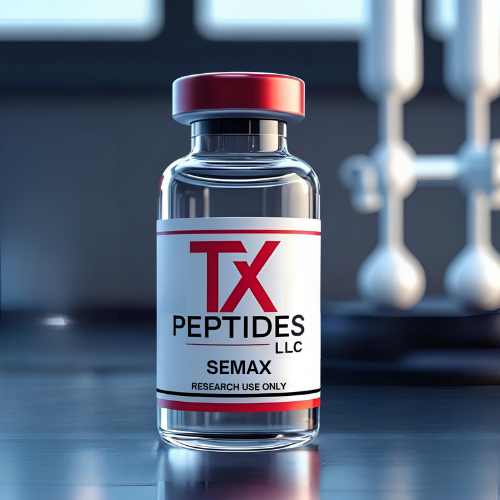
Semax is a synthetic peptide compound derived from a modified fragment of adrenocorticotropic hormone (ACTH), specifically ACTH(4-10). Through structural modification, Semax was developed to improve stability and resistance to rapid enzymatic degradation in laboratory environments while retaining activity associated with melanocortin-related signaling pathways.
Research involving Semax has explored its interaction with neuroregulatory and peptide-signaling systems, particularly within models related to neurotransmitter activity, neurotrophic factor expression, and cellular communication pathways. Investigational studies have also examined its relationship with brain-derived neurotrophic factor (BDNF) expression and other regulatory mechanisms associated with neuronal signaling and cognitive pathway research.
Compound Class: Research Peptide
Purity Grade: ≥99% (HPLC Verified)
Appearance: Lyophilized white powder
Formulation: Research-grade lyophilized preparation
Storage Conditions: Store at -20°C, desiccated, protected from light
Solubility: Soluble in bacteriostatic water
Stability: Maintained under recommended storage conditions
Research Use: Intended strictly for laboratory and analytical research purposes
Handling Precautions: Research use only — Not for human consumption
Semax is a synthetic peptide compound derived from a modified fragment of adrenocorticotropic hormone (ACTH), specifically ACTH(4-10). Through structural modification, Semax was developed to improve stability and resistance to rapid enzymatic degradation in laboratory environments while retaining activity associated with melanocortin-related signaling pathways.
Research involving Semax has explored its interaction with neuroregulatory and peptide-signaling systems, particularly within models related to neurotransmitter activity, neurotrophic factor expression, and cellular communication pathways. Investigational studies have also examined its relationship with brain-derived neurotrophic factor (BDNF) expression and other regulatory mechanisms associated with neuronal signaling and cognitive pathway research.