

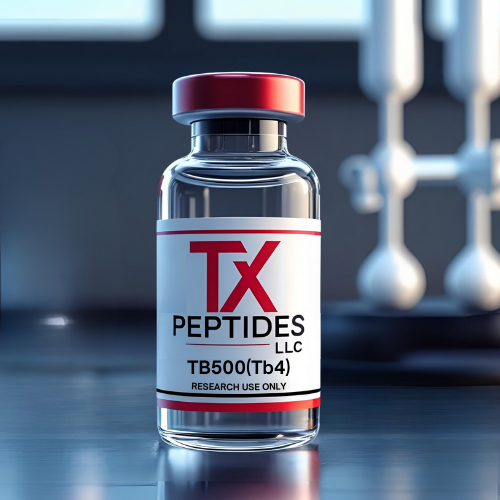
 Image 1 of 1
Compound Class: Research Peptide
Purity Grade: ≥99% (HPLC Verified)
Appearance: Lyophilized white powder
Formulation: Research-grade lyophilized preparation
Storage Conditions: Store at -20°C, desiccated, protected from light
Solubility: Soluble in bacteriostatic water
Stability: Maintained under recommended storage conditions
Research Use: Intended strictly for laboratory and analytical research purposes
Handling Precautions: Research use only — Not for human consumption
TB-500 is a synthetic peptide fragment of Thymosin Beta-4 (TB4), a naturally occurring protein found in nearly all human and animal cells. Thymosin Beta-4 plays a central role in cellular organization and movement, primarily through its regulation of actin, a protein critical for cell structure and motility.
Laboratory research involving TB-500 has focused on its potential influence on cell migration, angiogenesis, inflammation modulation, and tissue recovery pathways. Preclinical models have explored its effects on wound healing, tissue regeneration, and recovery from cellular injury, making it a compound of significant interest in regenerative biology and molecular repair studies.
TB-500’s synthetic design provides researchers with a stable and consistent tool for studying the downstream effects of actin regulation and peptide-mediated recovery mechanisms.
Compound Class: Research Peptide
Purity Grade: ≥99% (HPLC Verified)
Appearance: Lyophilized white powder
Formulation: Research-grade lyophilized preparation
Storage Conditions: Store at -20°C, desiccated, protected from light
Solubility: Soluble in bacteriostatic water
Stability: Maintained under recommended storage conditions
Research Use: Intended strictly for laboratory and analytical research purposes
Handling Precautions: Research use only — Not for human consumption
TB-500 is a synthetic peptide fragment of Thymosin Beta-4 (TB4), a naturally occurring protein found in nearly all human and animal cells. Thymosin Beta-4 plays a central role in cellular organization and movement, primarily through its regulation of actin, a protein critical for cell structure and motility.
Laboratory research involving TB-500 has focused on its potential influence on cell migration, angiogenesis, inflammation modulation, and tissue recovery pathways. Preclinical models have explored its effects on wound healing, tissue regeneration, and recovery from cellular injury, making it a compound of significant interest in regenerative biology and molecular repair studies.
TB-500’s synthetic design provides researchers with a stable and consistent tool for studying the downstream effects of actin regulation and peptide-mediated recovery mechanisms.