Advancing Health
Through Innovative Research
Welcome to our hub of cutting-edge medical research, where leading experts work tirelessly to advance global health through innovative solutions and rigorous scientific inquiry. Our commitment to excellence is unwavering as we strive to address the most pressing medical challenges of our time.
Featured Products
Compound Class: Research Peptide
Purity Grade: ≥99% (HPLC Verified)
Appearance: Lyophilized white powder
Formulation: Research-grade lyophilized preparation
Storage Conditions: Store at -20°C, desiccated, protected from light
Solubility: Soluble in bacteriostatic water
Stability: Maintained under recommended storage conditions
Research Use: Intended strictly for laboratory and analytical research purposes
Handling Precautions: Research use only — Not for human consumption
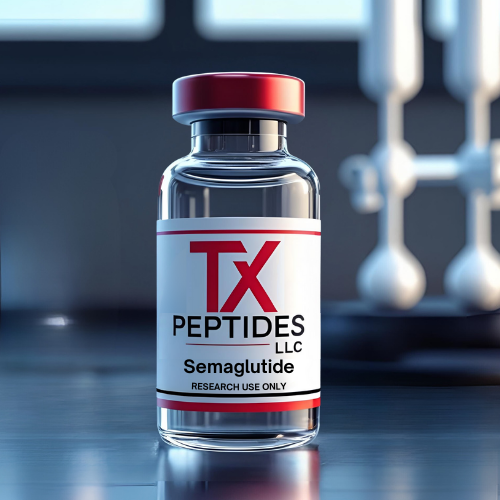
Semaglutide is a long-acting synthetic analog of glucagon-like peptide-1 (GLP-1), a naturally occurring incretin hormone. It demonstrates high affinity for GLP-1 receptors and is being investigated in laboratory studies for its ability to modulate glucose-dependent insulin secretion, suppress glucagon release, and influence satiety signals. Research applications include studies of metabolic regulation, pancreatic beta-cell activity, gastrointestinal motility, and energy balance in both in-vitro and in-vivo models. Because of its extended half-life, semaglutide is of particular interest in research focused on sustained incretin signaling and pharmacokinetics.
Helps regulate blood sugar levels
Increases insulin release when needed
Reduces appetite and slows digestion
Compound Class: Research Peptide
Purity Grade: ≥99% (HPLC Verified)
Appearance: Lyophilized white powder
Formulation: Research-grade lyophilized preparation
Storage Conditions: Store at -20°C, desiccated, protected from light
Solubility: Soluble in bacteriostatic water
Stability: Maintained under recommended storage conditions
Research Use: Intended strictly for laboratory and analytical research purposes
Handling Precautions: Research use only — Not for human consumption
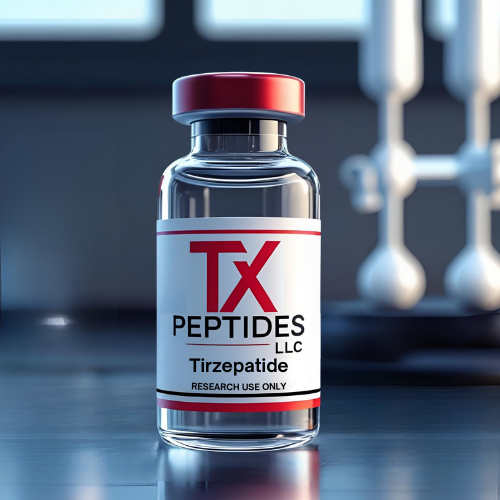
Tirzepatide is a synthetic peptide analog that functions as a dual glucose-dependent insulinotropic polypeptide (GIP) and glucagon-like peptide-1 (GLP-1) receptor agonist. This unique dual agonism makes tirzepatide an important compound of interest for laboratory research focused on metabolic pathways, energy balance, and peptide-based therapeutics.
Researchers have studied tirzepatide in relation to glucose regulation, appetite signaling, and weight management mechanisms in preclinical and clinical environments. Its distinct mechanism of action, compared to traditional GLP-1 receptor agonists, provides valuable opportunities for advancing the understanding of incretin biology.
Compound Class: Research Peptide
Purity Grade: ≥99% (HPLC Verified)
Appearance: Lyophilized white powder
Formulation: Research-grade lyophilized preparation
Storage Conditions: Store at -20°C, desiccated, protected from light
Solubility: Soluble in bacteriostatic water
Stability: Maintained under recommended storage conditions
Research Use: Intended strictly for laboratory and analytical research purposes
Handling Precautions: Research use only — Not for human consumption
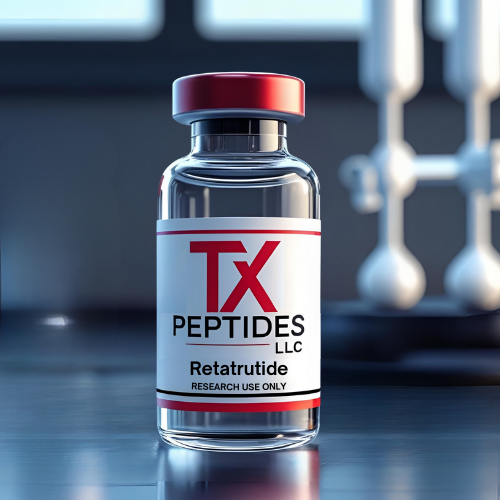
Retatrutide is an investigational synthetic peptide classified as a triple incretin receptor agonist, designed to activate glucose-dependent insulinotropic polypeptide (GIP), glucagon-like peptide-1 (GLP-1), and glucagon receptors. This multi-receptor agonism makes it a unique compound of interest in metabolic research, particularly in studies examining glucose regulation, energy expenditure, lipid metabolism, and body weight dynamics.
Laboratory research into Retatrutide has focused on its ability to integrate multiple metabolic pathways simultaneously, providing insight into the combined effects of incretin and glucagon signaling on insulin sensitivity, appetite regulation, and thermogenesis. Comparative studies with single- and dual-agonist peptides highlight its potential as a tool for advancing the understanding of complex metabolic disorders and energy balance.
Compound Class: Research Peptide
Purity Grade: ≥99% (HPLC Verified)
Appearance: Lyophilized white powder
Formulation: Research-grade lyophilized preparation
Storage Conditions: Store at -20°C, desiccated, protected from light
Solubility: Soluble in bacteriostatic water
Stability: Maintained under recommended storage conditions
Research Use: Intended strictly for laboratory and analytical research purposes
Handling Precautions: Research use only — Not for human consumption
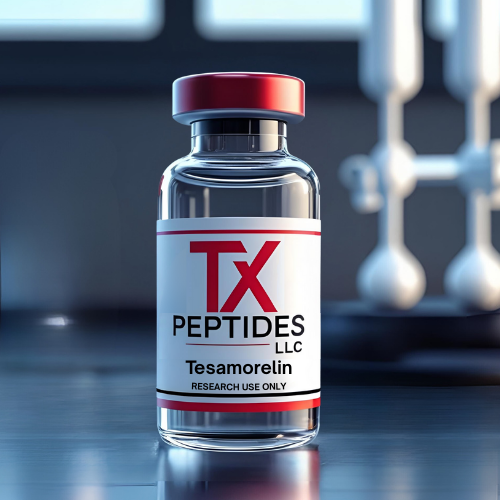
Tesamorelin is a synthetic peptide analog of growth hormone–releasing hormone (GHRH), developed to enhance stability and extend biological activity compared to native GHRH. Laboratory research has focused on its ability to stimulate pituitary growth hormone secretion and its downstream influence on insulin-like growth factor-1 (IGF-1) pathways.
Preclinical and clinical research settings have explored Tesamorelin in relation to body composition, lipid metabolism, and regulation of visceral adipose tissue. Studies indicate it may provide insight into the mechanisms of growth hormone deficiency, metabolic regulation, and endocrine signaling. Its enhanced stability, relative to natural GHRH, makes it a valuable tool for extended research protocols requiring consistent and reliable receptor activation.

Contact Us